
 USA: +1 508 290 1604
  Sign in

QUESTION
Required Resources
Read/review the following resources for this activity:
- Textbook: Chapter 12, 14
- Lesson
- Minimum of 1 scholarly source (in addition to the textbook)
Initial Post Instructions
For the initial post, pick three (3) of the leading causes of the American Civil War: (Pick 2 sets of 3 leading causes and write 6 pages)
- The Compromise of 1850
- The Fugitive Slave Law 1850
- Uncle Tom’s Cabin 1852
- The Kansas Nebraska Act 1854
- The Dred Scott Case of 1857
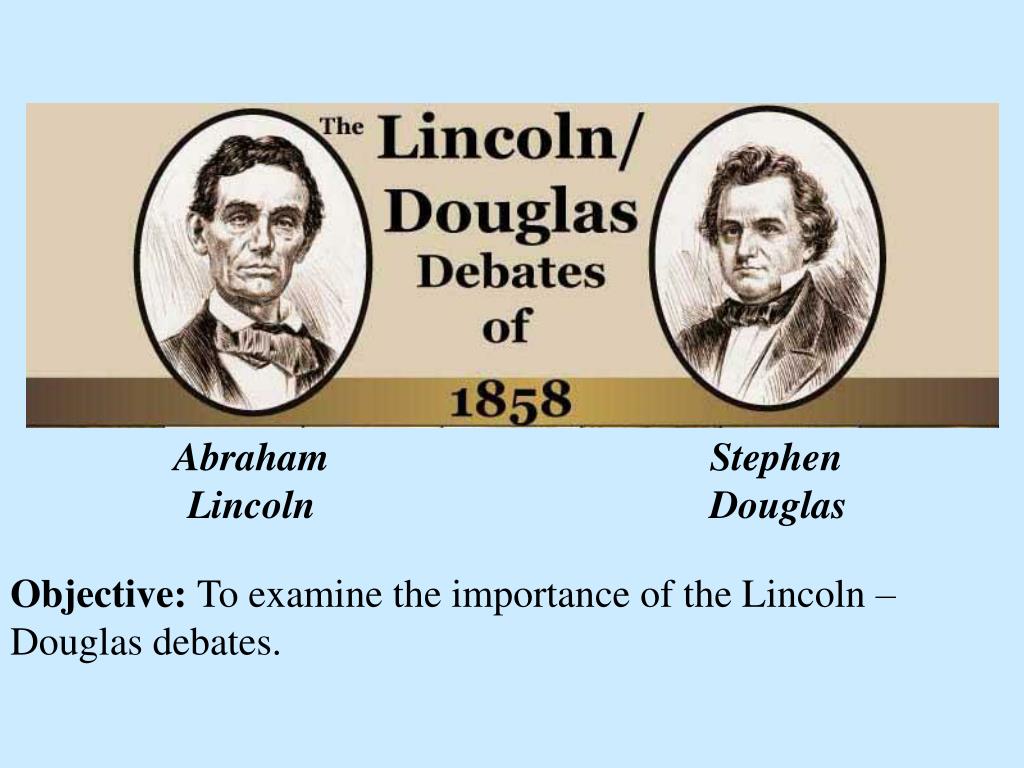
- The Lincoln Douglas Debates 1858
Then, address all of the following for your selections:
- Based on the historical facts given in this module, assess if the American Civil War was inevitable.
- Analyze if the United States Supreme Court can settle legal and moral issues through judiciary review. In your response, provide a documented example of a modern parallel of a legal or moral issue settled by the United States Supreme Court.
ANSWER
Option 1. The Compromise of 1850, The Fugitive Slave Law 1850, Uncle Tom’s Cabin 1852
Based on the historical facts in this module, assess if the American Civil War was inevitable.
The American Civil War was inevitable. The Compromise of 1850 was designed to resolve the conflict between the Northern and Southern States. However, this law did not have the intended impact and only exacerbated the conflict between the states. Corbett et al. (2016) indicate that tensions in the country remained high despite the truce being passed (p.357). In the Compromise, Congress determined that each state would decide whether slavery would be permitted within their territories. The Southern states were receptive to this idea because it aligned with the principles of popular sovereignty and the logic of democracy.
However, the federal government soon realized that the country’s issues could not solved within the confines of state legislatures. It was a question of the United States’ identity as a single entity, not a sum of individual states. The Fugitive Slave Law of 1850 gives credence to this statement. The Law, which ruled in favor of the South, mandated that all enslaved people be returned to their owners (Corbett et al., 2016, p.357). The Northern states had also benefitted from the Compromise because Congress had admitted California as a free state.
Despite the demands of each group being met, the conflicts between them still exacerbated. Many Northerners felt the Fugitive Slave Law forced them to become slave catchers, while other abolitionists felt resisting it necessitated violence (Corbett et al., 2016, p.360). Northerners were alarmed by the realization that elite slaveholders had the power to influence the federal government to create domestic and foreign policies that supported their interests, creating mistrust between the two groups.
Uncle Tom’s Cabin was also a consequential reaction against the fugitive law. The novel inspired many abolitionists to fight against the Fugitive Slave Act. However, their response only mounted the conflict between the Northern and Southern states.
Leaving states to determine slavery within their borders could resolve the dispute. However, the United States was no longer a sum of separate parts (states) but a single entity. Policies favoring one state impacted another state, exacerbating sectional and state tensions. Extremists in the South started demanding secession but knew the Union would react negatively to their demands. These sentiments gathered strength and, eventually, erupted into elemental violence, causing the Civil War.
Analyze if the United States Supreme Court can settle legal and moral issues through judiciary review. In your response, provide a documented example of a modern parallel of a legal or ethical issue settled by the United States Supreme Court.
The Supreme Court can settle legal and moral issues through judicial review but not in all circumstances. The judicial review refers to the Supreme Court’s power to review and nullify the president’s and Congress’ actions. It allows the court to ensure that other government branches, including the legislature and the executive, abide by the Constitution. It stipulates that no action or Law can contradict the Constitution, and state courts can only review state laws or constitutions.
Recent cases such as Shelby County v. Holder demonstrate the super-legislative power of the Supreme Court (Leiter, 2015). The Supreme Court invalidated a section of the Voting Rights Act- which specified that states with a history of voting discrimination needed federal approval for election law amendments. The Supreme Court ruled it was no longer necessary, contradicting the legislature’s opinion seven years earlier. This case shows that the Supreme can settle legal issues.
Although the Supreme Court is the highest authority on law interpretation and moral matters, its judgments are always moral or ethically acceptable (“Can the US Supreme Court Settle Moral Issues?” n.d). Cases such as Dred Scott vs. Sanford, Bradwell vs. Illinois, and Plessy vs. Ferguson demonstrate that the Supreme Court is not entirely skilled or qualified to decide moral matters. For example, Dred Scott argued in a state court that he should be granted his freedom because he lived in a state where the Law had abolished slavery. The state courts initially ruled in favor of Scott but rescinded this decision under duress. Dred Scott took the legal battle to the Supreme Court, which decided Scott should remain enslaved. This case demonstrates the Supreme Court’s incompetency regarding certain moral issues. The Supreme Court can accurately determine basic moral issues such as murder or rape that violate all human and moral issues (“Can the US Supreme Court Settle Moral Issues?,” n.d.). However, racism, religion, and sex cases have varying interpretations and opinions; hence, their universal acceptance is difficult. This statement means that the Supreme Court cannot always settle moral issues through judicial review.
Option 2. The Kansas Nebraska Act 1854, The Dred Scott Case of 1857, The Lincoln Douglas Debates 1858
Based on the historical facts in this module, assess if the American Civil War was inevitable.
The events following Kansas Nebraska Act 1854, the Dred Scott Case of 1857, and the Lincoln Douglas Debates 1858 demonstrate that the Civil War was inevitable. The Kansas Nebraska Act of 1834 was established in response to intra-party conflicts. Leaders of the Democratic Party hoped this bill would unite the party and appease their colleagues in the South (Corbett et al., 2016, p.362). In 1854, Douglas introduced a bill that created two separate territories: Kansas and Nebraska. The bill also proposed the repeal of the 36° 30′ boundary of the Missouri Compromise. It applied the popular sovereignty principle, dictating that each territory would decide for themselves whether to adopt slavery.
The principles of popular sovereignty made sense and reflected America’s logic of democracy. However, this principle also became partisan because it permitted slavery in some states. Free-Soilers rejected this principle entirely, while Pro-slavers demanded the principle apply to all territories (Corbett et al., 2016, p.362). The conflict between the South and North would likely continue, given that the Kansas Nebraska Act applied this principle in resolving slavery issues.
The Kansas-Nebraska bill passed Congress narrowly (113-110 votes), and it resulted in significant political consequences. The Democratic Party split and those who rejected the Kansas-Nebraska Act created a new party, the Republican Party. The new Republican Party, pledged to fight against slavery. This move infuriated the South, causing proslavery Missourians to cross borders into Kansas to support the South’s interests. According to Corbett et al. (2016), up to 60% of votes supporting slavery were fraudulent, deepening the political conflict (p.364).
With the help of border ruffians (people who crossed borders to influence territorial elections on slavery), Northern political parties managed to pass the Lecompton Constitution that allowed slavery in the new states. This legislation contradicted Kansas’ first Constitution, the Topeka Constitution. Kansas voters defeated the Lecompton Constitution by an overwhelming margin of 10,226 to 138 in a separate election. This defeat led to clashes between the border ruffians and anti-slavery supporters.
Anti-slavery citizens were indicted for treason. On May 21, Samuel Jones, the County Sherriff, rode into town equipped with rifles, revolvers, cutlasses, and bowie knives, falsely claiming he had a court order for this. A crouching tiger banner and an American flag flew at the front of the procession. Other banners read “Southern rights” and “White supremacy.” The posse destroyed the Herald of Freedom and Kansas Free State publications and burned down the Free State Hotel (Figure 14.14). Lawrence inhabitants were uninjured but terrified. Shortly after, John Brown executed Proslavery Tennesseans, precipitating guerilla warfare between proslavery groups and Anti-slavery groups. The violent conflicts continued, and Kansas became known as bleeding Kansas.
The Republicans interpreted the court’s decision in the Dred Scott case as unconstitutional and proof of the South’s slave power. Most felt that the South used its power to influence the Supreme Court’s decision. In the debates, Abraham Lincoln interpreted the Nebraska-Kansas Act and the Dred Scott decision as a strategy for nationalizing slavery. On the other hand, Douglas argued that the Republican Party was committed to bringing race-mixing through marriage and sexual relations.
A personal opinion is that Abraham Lincoln was right in his analysis of the prevailing situation in the United States. He said:
“A house divided against itself cannot stand. I believe this government cannot endure permanently half Slave and half Free. I do not expect the Union to be dissolved—I do not expect the house to fall—but I do expect it will cease to be divided. It will become all one thing, or all the other. Either the opponents of slavery will arrest the further spread of it, and place it where the public mind shall rest in the belief that it is in the course of ultimate extinction: or its advocates will push it forward till it shall became alike lawful in all the States—old as well as new, north as well as South.” (Corbett et al., 2016, p.370)
This statement summarizes my views regarding the three historical events. No group was ready to give in to the demands of the other. On the other hand, the country could not continue existing as a half-slave or half-free nation because each group was trying to tug the other to their side. Due to these conflicts and the inability to compromise, it is clear that the Civil War was inevitable.
Analyze if the United States Supreme Court can settle legal and moral issues through judiciary review. In your response, provide a documented example of a modern parallel of a legal or moral issue settled by the United States Supreme Court.
Recent cases such as Shelby County v. Holder demonstrate the super-legislative power of the Supreme Court (Leiter, 2015). The Supreme Court invalidated a section of the Voting Rights Act- which specified that states with a history of voting discrimination needed federal approval for election law amendments. The Supreme Court ruled it was no longer necessary, contradicting the legislature’s opinion seven years earlier. This case shows that the Supreme can settle legal issues.
A review by Leiter (2015) explained that the Supreme Court operates under limited Jurisdiction. The first limitation is that the Supreme Court can only rule on issues brought to it. Secondly, it is constrained by legislative and constitutional texts and their past decisions. According to Leiter (2015), the Supreme Court’s final decisions are not based on legally binding standards but the political and moral values of the Justices. The decisive criteria of the Supreme Court are always based on its justices’ moral and political values. Speculation on nominees’ political predilections is usually speculated in the media. However, their actual political or ethical views are often off-limits in the confirmation process. Leiter (2015) believes that these factors demonstrate that the Supreme Court is a political actor with limited Jurisdiction in legal and moral issues.
References
Can the US Supreme Court Settle Moral Issues? (n.d.). The Supreme Court of the United States. https://usscmorals.weebly.com/
Corbett, P. S., Janseen, V., Lund, J., Pfannestiel, T., Vickery, P., & Waskiewicz, S. (2016). US History. OpenStax.
Leiter, B. (2014). Constitutional Law, Moral Judgment, and the Supreme Court as Super-Legislature. Hastings LJ, 66, 1601. https://chicagounbound.uchicago.edu/cgi/viewcontent.cgi?article=1976&context=public_law_and_legal_theory
To get your original copy of this completed paper, please Order Now
Related Topics
Clay’s Debate of American System in 1832

