
 USA: +1 508 290 1604
  Sign in

Master Decker’s History and Position in the Market
Druzz established Master Decker in 2014. Even though he began restoring Decks in his second year, he identified a business opportunity that would help seal the gap caused by higher demand and a lack of specialized deck maintenance and operator in Ontario. The company is headquartered in Zorra, Ontario, which is a strategic location for it to serve its customers. Master Decker specializes in sealing stains and repairing decks as well as other wood structures, thereby modifying the service and operational methodologies of Australian and American deck-servicing companies to meet the Canadian climate. Druzcz built himself a brand name by becoming actively involved in community services while young. When he established Master Decks, several business influencers and investors became interested and promoted his company based on his reputation. The robust relationships enabled him to attract a higher customer base, making him have a strong brand position in the market.
Due to its investment in marketing, the company has grown to be popular in Ontario. The position has enabled it to have a strong market base. Promotion is critical in business success, and Master Decks has identified the importance of value addition to ensure that its services are high-quality. Such competitiveness leads to improved customer satisfaction, which has led further customer referrals and return purchases. Client satisfaction is an essential aspect of business success as it helps to create customer loyalty, and hence, acts as a source of competitive advantage in the market (Atz et al., 2019). Accordingly, the reliance on an online advertisement and promotional methods such as Google AdWords, Google Reviews, and the company’s website has allowed Master Decker to amass a large customer base and a strong position in the market. Besides, the increased growth in the Canadian retail industry has led to an increase in demand for Decker services, thereby making the company to be in a stronger position in the market.
Qualitative Analysis of the Different Options
Deck-building Opportunity
Currently, Master Decker specializes in offering services for maintenance of decks. However, Druzcz has identified a business opportunity of making the company expand into becoming a deck-building company. The main advantage of the opportunity is that it will lead to the satisfaction of several customers who have been seeking if the company builds decks (Paparoidamis, Tran, & Leonidou, 2019). Customer satisfaction is an essential aspect of a business, and by venturing into the opportunity, Master Decker will be demonstrating that it takes customer feedback seriously.
The improved status of the real estate industry in Ontario will result in the company making more revenue as it already has a stable demand. However, the opportunity results in some risks, which must be considered. In this case, several customers would change their mind concerning the suitability of Master Decker as an expert in deck restoration. Such a state would lead to negative reviews, which would affect the company’s performance as it highly depends on the brand image to increase its sales. Another risk to the opportunity is the lack of quality end-product. The change requires Druzcz to hire another carpenter, who will be the new personnel needed to meet the standards of Master Decker. If the worker fails to meet the criteria, he might lead to the production of inferior quality products, thereby damaging the brand image of the company (Rees, 2016). If Druzcz decides to go with the opportunity, he needs to develop sophisticated human resource and risk management to maintain the company’s current status.
Exclusive Master Decker Stains
The opportunity would be to become a retailer of top-o-the-line stains. This chance provided high revenue collection and demand security to the business. Due to its absence to the DIYers, Master Decker would become a place to go to. Secondly, this opportunity had no risk on the quality of the organization as it required no additional employees, hence saving the company the costs of hiring. However, the opportunity posed the disadvantage of consuming up to ten percent of Druzcz’s time. Time is precious in business, and therefore, Druzcz must determine the amount he can make by using ten percent of his time and compare it with the opportunity’s return on investment (Phelps, 2018). However, the option is more profitable if DFM agrees to let Master Decker be the only retailer purchasing its products.
Manufactured Cleaning Chemicals
The option is advantageous as it requires no additional staff employed, thus eliminating the risk of quality failure. Secondly, the opportunity would require little time as opposed to the one above that would consume to ten percent of his time. Employees have experience in mixing chemicals, which is an assurance of quality. Selling the products at lower costs would increase the brand image of Master Decker, and hence, ensure continued demand and gain the competitive advantage of improved brand and customer loyalty (Joshi & Sankaranarayanan, 2019). Similarly, the option would be easy with minimum disruption to the daily operation of the company. However, the main disadvantage is that the opportunity would not raise substantial revenues to the organization. This choice will, therefore, depend on the risk-averseness of Master Decker.
Qualitative Analysis
Table 1: Deck Building
Therefore, the initial investment for the project would be $107,400, and the project is expected to earn an annual inflow of $100,000 per year. In the first year, the company will make a net loss of (109,900 – 100,000) = $9,900. However, in the second and consecutive years, the project will earn net revenue of $100,000 – $89,900 = $10,100.
The return on investment of the opportunity is calculated using the formula net profit/cost, which for the first year is -9,900/109,900 = -9%. In the second and subsequent years, the return on investment would be 10,100/89,900 = 11.23%.
Table 2: Exclusive Master Decker Stains
In the first year, the opportunity will earn net income of (35,000 – 26,455) = $8,545. In the second and subsequent years, the project would earn net revenue of (35,000 – 24,655) = $10,345.
Return on investment in the first year = 8,545 / 26,455 = 32.3%, whereas the ROI in the second and subsequent years is (10,345/26455) = 39.1%.
Table 3: Manufactured Cleaning Chemicals
The opportunity will earn yearly net revenue of (12,000 – 7,900) = $4,100. The NPV of the project in the next five years at 10% is $ 41,030.10. Its ROI will be (4,100/12,000) =
Graphical Presentation of the ROI
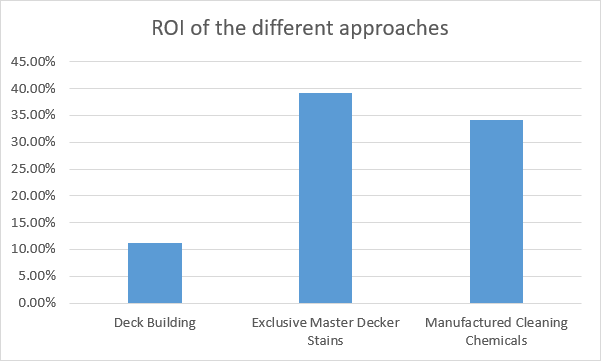
Figure 1: ROI of the different approaches
Comparison and Recommendation
Based on the qualitative analysis, Master Decker would prefer to expand in the cleaning manufactured chemicals. However, since the main purpose of a business is to make a profit, it is important to consider the revenue earned and the return on investment (Phillips, 2007). The net annual revenue of cleaning chemicals is the lowest, and hence, not preferred. This scenario leaves him with two options. Based on the return on investment, selecting the stain sales would earn a higher ROI (39%) compared to the 11.23% of building the decks option. Besides, the stains would require lower initial investments, unlike the option of building decks. Hence, this move would make Master Decker not to borrow from external lenders. In this case, the option would be to expand in Exclusive Master Decker Stains as it requires lower initial capital and has lower risks and a higher return on investment.
References
Atz, U., Van Holt, T., Douglas, E., & Whelan, T. (2019). The return on sustainability investment (ROSI): Monetizing financial benefits of sustainability actions in companies. Review of Business, 39(2), 1–31.
Edwards, C. (2018). Small Business: Trade Show Factors of Success. International Journal of Business, Marketing, and Decision Sciences (IJBMDS), (1), 21
Joshi, A. M., & Sankaranarayanan, K. G. (2019). Implications of service quality on customer satisfaction, loyalty, and performance of selected banks. ZENITH International Journal of Multidisciplinary Research, (4), 152.
Paparoidamis, N. G., Tran, H. T. T., & Leonidou, C. N. (2019). Building Customer Loyalty in Intercultural Service Encounters: The Role of Service Employees’ Cultural Intelligence. Journal of International Marketing, 27(2), 56–75. https://eprints.whiterose.ac.uk/142930/3/Paparoidamis%20et%20al.%202019%2C%20JIM%20-%20AAM.pdf
Phelps, R. (2018). The true value and return on investment of business continuity. Journal of Business Continuity & Emergency Planning, 11(3), 216–222. https://pubmed.ncbi.nlm.nih.gov/29592822/
Phillips, P. P. (2007). The ROI fieldbook. [electronic resource] : strategies for implementing ROI in HR and training. Butterworth-Heinemann.
Rees, J. H. (2016). Protecting your brand in a complicated Internet landscape. Business Law Today, 1.

