
 USA: +1 508 290 1604
  Sign in

QUESTION
Individual Assignment Instructions (Innovation Management)
Choose an innovation ‘failure’ that you are familiar with (from your own experience or a case study example) and for which you can gather enough information about. Using the concepts, theories and frameworks from the module, carry out a critical review of the ways in which this organisation manages innovation. Describe the organisation’s approach to innovation: how do they search for, select and implement innovation. What lessons can you derive from this organisation’s innovation successes and failures?
Word Count: 2,500 Words (excluding references, tables, figures, and appendices). The word count needs to be stated at the end of the report. Reports exceeding the word count will not be marked.
Assessment Criteria
To successfully pass this assessment, you need to have:
• Provided evidence of reading around the topic and shown good understanding of key concepts (comprehension)
• Included relevant theory and presented reasonable arguments when evaluating the organization’s approach to innovation (analysis)
• Critically discussed different viewpoints with arguments carefully developed and clearly expounded (analysis and critical evaluation)
• Shown originality of thought (critical evaluation)
• Good structure, clear and concise writing, and referenced accurately (academic writing)
ANSWER
Innovation Management
Innovation failure refers to whether a company’s innovation achieved the desired goals. Due to the external or internal environment, a firm’s innovation may be canceled or terminated because it failed to produce the expected value. According to Xiong et al. (2022), how firms choose to respond to innovation value affects their competitiveness. Innovation failures provide valuable lessons for future re-innovation decisions, enhancing innovation quality for maintaining firm competitiveness (Xiong et al., 2022). However, learning from innovation failure is not always guaranteed. It is a complex process as firms face the financial consequences and emotional and social costs of the failure. Failure to learn from innovation might affect firm competitiveness, explaining why it is crucial to explore the concept. This paper examines the innovation practices of Pfizer, including its approach to innovation and lessons that can be derived from its innovation success and failures.
Pfizer’s Strategies for Searching for Innovation
Pfizer searches for innovation by collaborating with other research organizations, biopharmaceutical companies, and academic institutions. Pfizer (2022) indicates that it leverages the innovative technologies developed by other firms through collaborations, alliances, license agreements with universities, acquisitions, and biotechnology companies (Pfizer, 2022). The open innovation theory supports this collaborative approach. The open innovation theory posits that firms should exploit both internal and external resources to advance innovation (Orlova1, 2019). Open innovation is the purposeful use of inflow and outflow knowledge to accelerate innovation. Likewise, Pfizer has leveraged external knowledge to support its innovation efforts.
For example, Pfizer partnered with UCSF (the University of California, San Francisco) to create new treatment therapies for neurodegenerative diseases (Bole, 2010). This alliance gave birth to the Center for Therapeutic Innovation, charged with identifying promising experimental molecules that could be quickly converted into clinical trials. Scientists from both camps collaborate to accelerate drug discovery and the development of new treatment therapies (Bole, 2010). Pfizer also engages with medical practitioners and patients to understand their needs and identify unmet needs presenting business opportunities. According to the open innovation theory, this collaboration and external partnerships can augment a firm’s internal capabilities (Orlova, 2019). Pfizer’s collaboration with external capabilities stimulates its innovativeness by enabling knowledge-sharing that reveals undiscovered business and innovation opportunities.
Pfizer also uses research and development (R&D) to search for innovation. Pfizer’s 2022 Annual Report indicates that the company invested over $9.7 billion in research and development (Pfizer, 2022). According to Pfizer, its R&D strategy aims to improve the effectiveness of existing products and discover potential new indications (Pfizer, 2022). Pfizer conducts its R&D activities through the Worldwide Research, Development and Medical (WRDM) platform, Global Product Development Organization (GPD), and internal research units. WRDM is responsible for the early-stage development of assets yet to achieve proof-of-concept (Pfizer, 2022). Within the WRDM are science-based organizations that provide technical expertise to various R&D projects.
The GDP is responsible for developing and operational execution of early-and late-stage clinical assets. Pfizer manages its R&D projects through these platforms (Pfizer, 2022). The Portfolio management team, composed of senior executives, allocate resources among the GDP, WRDM, and R&D projects to ensure maximum accountability and optimal fund allocation across the innovative R&D portfolio. Pfizer had 110 R&D projects in 2022 alone. These projects are outlined below (Pfizer, 2022):
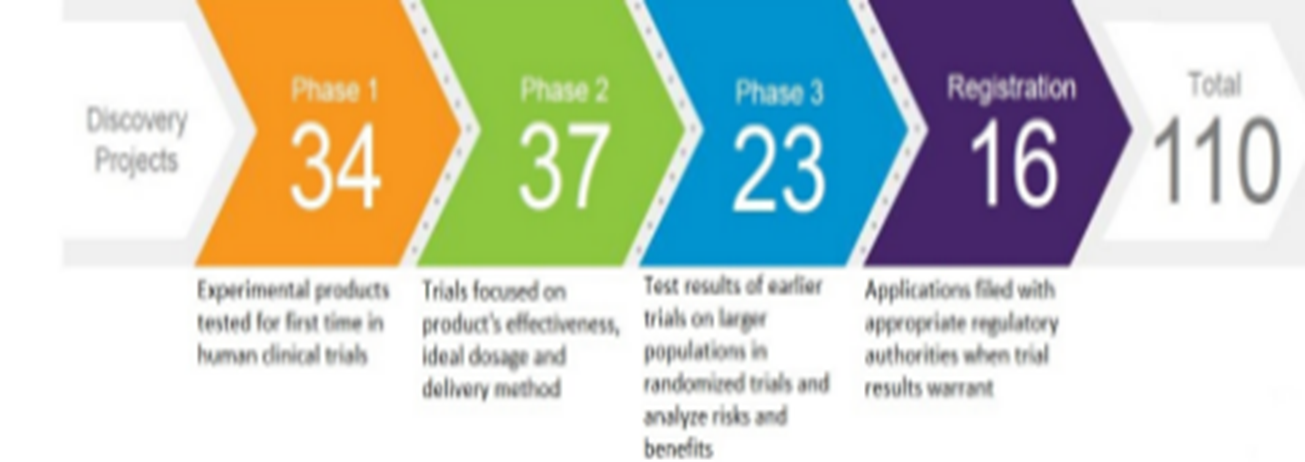
Pfizer’s capabilities in R&D have enabled the firm to develop a strong pipeline of potential new therapies. The resource-based view posits that a firm’s capabilities and resources can be a source of competitive advantage. Pfizer’s R&D investments are valuable resources that have enabled the firm to develop innovative drugs and vaccines, giving it competitive edge. Pfizer’s R&D resources include human capital, patents and intellectual property, financial resources, and collaborative partnerships.
Pfizer’s Strategies for Selecting Innovation
Pfizer’s rigorous innovation selection process involves evaluating each innovation’s financial viability and clinical impact. Organizations typically receive many innovative ideas and selecting the idea to pursue might be challenging. Pfizer selects innovations by conducting market research and feasibility studies. Feasibility studies involve a cost-benefit analysis. In cost-benefit analyses, managers compare the potential benefits of an idea relative to its development costs. Managers then select ideas that offer incremental benefit at low investment costs.
During the initial stage of the selection process, Pfizer conducts a feasibility assessment, evaluating each innovation’s potential impact and financial viability. For example, in 2011, Pfizer invested in tofacitinib, a drug for rheumatoid arthritis (Pfizer, 2012). Before investing in the drug, Pfizer performed extensive market research to determine its potential clinical impact and financial viability. This assessment involved examining customers’ needs, the potential market size for the drug, and the potential revenues it would generate. According to Pfizer (2012), this market research revealed a significant unmet need for rheumatoid arthritis treatments. Based on research findings, Pfizer discovered that the drug had a large potential market, given the number of people with rheumatoid arthritis (Pfizer, 2012). This market research justified Pfizer’s decision to invest in tofacitinib. In 2012, the medication was approved by FDA. Since then, tofacitinib has generated revenues worth billions for Pfizer.
Other assessments that are done to select innovations include conducting risk assessments. The company also evaluates the regulatory requirements involved in developing and testing an innovation, potential legal and intellectual rights issues, technical feasibility of producing the innovation, and alignment with organizational alignment involves assessing whether a potential innovation aligns with the firm’s mission, vision, and strategic priorities. For example, Pfizer’s vision is to produce drugs that change patients’ lives. Any innovation aligning with this vision is deprioritized or rejected because it does not bring any strategic value to the organization. Using the above criteria, Pfizer can systematically analyze and determine which innovative idea to pursue.
The stage-gate model posits that innovation is a structured process with a series of stages. Each stage has a unique set of decision points and gates. At each gate, managers evaluate innovation based on predetermined criteria. In the stage-gate model, specific activities are conducted depending on the innovation project’s stage. During the early stages, management activities focus on opportunity discovery and idea generation, while the later stages focus on testing, commercialization, or concept development. Only those innovations that go through the gate can proceed to the next stage. Pfizer’s rigorous selection process aligns with this model.
During the initial stage, Pfizer conducts market research, a customer needs assessment, and potential market size and revenue assessments to identify the innovation with the greatest success potential. Before moving to the next selection process, Pfizer conducts a risk assessment to identify the innovation’s potential legal or regulatory challenges. At each gate of the model, Pfizer conducts a feasibility study of the innovation, including technical and regulatory requirements. Applying the Stage-Gate model in the selection process helps Pfizer mitigate risks and ensure only promising innovations are pursued.
Implementation Strategies
In its 2022 annual report, Pfizer indicated that their business operations are subject to extensive government regulation. According to Pfizer, failure to comply with this regulation can subject them to legal and administrative action (Pfizer, 2022). These regulations require Pfizer to provide administrative implementation guidance to its project management team (Pfizer, 2022). Once an innovation has been selected, Pfizer uses a structured implementation approach. This approach entails developing a comprehensive implementation plan, creating a cross-functional team, conducting continuous monitoring and evaluation, and continuous quality improvement.
One specific example of Pfizer’s structured implementation approach is the Project Management Framework (PMF). The Project Management Framework refers to a set of standardized processes and tools the company uses to manage its projects. PMF includes various phases, including initiation, planning, execution, and monitoring & evaluation. During the initiation phase, Pfizer defines the project’s scope and creates a business case to justify the investment decision (Pfizer, n.d.). In the planning phase, Pfizer will develop a detailed project plan outlining the timeline, roles and responsibilities, project inputs and outputs, resources, and key performance indicators needed to measure progress (Pfizer, n.d.). Pfizer has established a cross-functional team, i.e., the pharmacy and therapeutics (P&T) committee, to oversee its implementation processes and ensure regulatory compliance. According to Pfizer (n.d), this P&T committee analyzes the implementation strategies related to the firm’s operational considerations. This committee is also responsible for carefully assessing and allocating resources to ensure smooth implementation strategy execution. As part of the best practices, Pfizer maintains clear communication with all stakeholders through the innovation implementation.
The P&T committee incorporates various strategic considerations when assessing an implementation plan. These considerations include scientific review, financial and coverage analysis, and operational considerations (Pfizer, n.d.). According to Pfizer, considering these aspects helps the company build an efficient implementation strategy and effectively respond to additional complexities.

In operational consideration, the committee considers four elements: operational enablement, informatics, education, and monitoring. Operational enablement involves evaluating the operational functionality of the innovation project. Informatics involves getting the organization’s infrastructure and information technology to prepare for the innovation’s entry (Pfizer, n.d.). Education involves training the clients and internal stakeholders on the innovation project. According to Pfizer, as part of the implementation process, the P&T committee educates healthcare providers, patients, and internal stakeholders. Pfizer ensures that its clients (medical practitioners and patients) know how to exploit the innovation for optimal outcomes (Pfizer, n.d.). Lastly, Pfizer conducts monitoring and evaluation of the financial outcomes of the innovation and clinical experience. Focusing on financial outcomes indicates that revenues and client experiences are the primary KPIs for Pfizer’s innovation. The following infographic outlines Pfizer’s implementation approach and best practices:
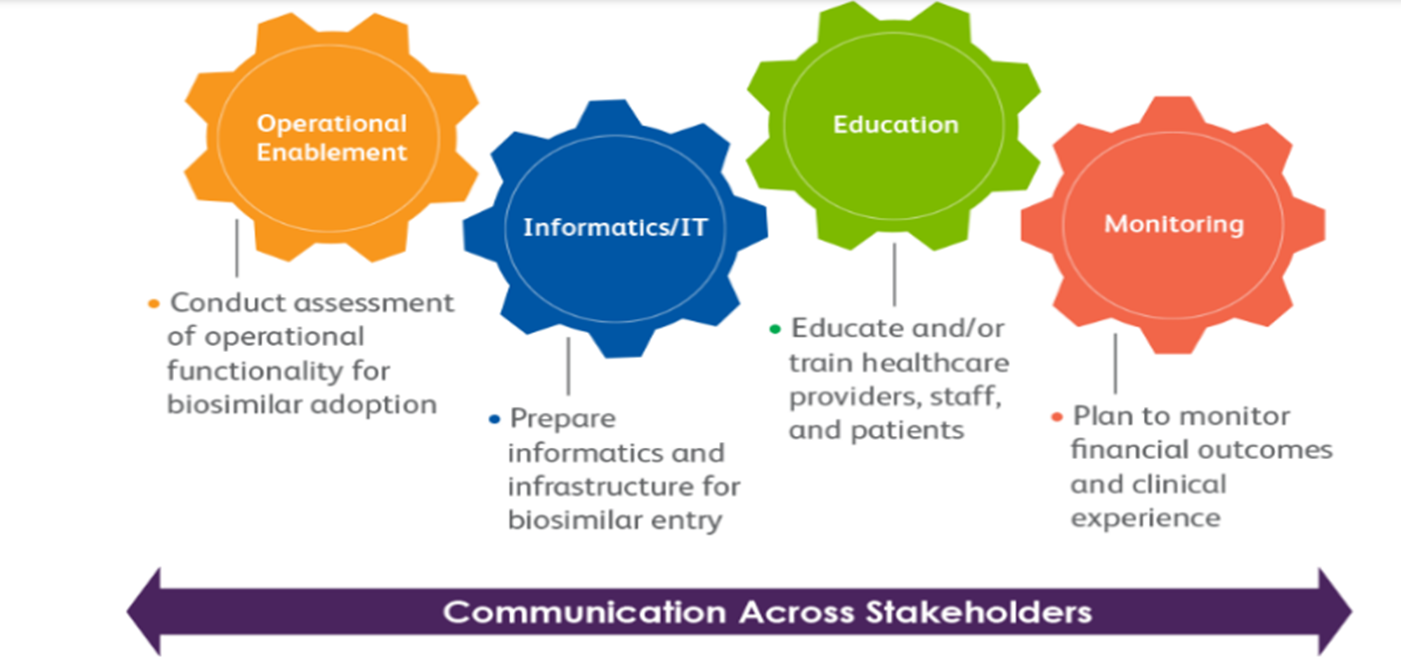
Pfizer’s Project Management Framework also includes a risk management plan to help the project management team to identify and mitigate potential risks that may hinder success. A stakeholder management plan is also essential for Pfizer’s implementation plan. As mentioned, Pfizer collaborates with other firms through alliances, license agreements with universities, acquisitions, and biotechnology companies. Pfizer’s 2022 Annual Report reports that the company faces challenges from its licensing partners and collaborations regarding the validity of its patent rights. According to the Report, these collaborations sometimes result in legal and regulatory action as each party fights for intellectual property rights related to innovated products.
For example, at the beginning of 2017, Pfizer took patent-infringement actions against a manufacturer seeking FDA approval to market the generic version of tofacitinib tablets. In March 2022, Alnylam Pharmaceuticals, Inc, filed a complaint against Pfizer alleging that the company had infringed the Comirnaty patent rights (Pfizer, 2022). Alnylam Pharmaceuticals Inc sought unspecified monetary damages for this patent infringement. Other companies that sued Pfizer and its partners in 2022 include Alnylam, ModernaTX, Inc., and Moderna US, Inc (Pfizer, 2022). These legal actions cost Pfizer substantial amounts of money, explaining why a stakeholder management plan is integrated into the company’s implementation plan.
Stakeholder management helps to manage expectations and protect Pfizer’s intellectual property. Bole (2010) claims that Pfizer offers its partners and collaborators liberal intellectual ownership to facilitate exploration and experimentation. However, Pfizer establishes clear guidelines on intellectual property ownership of the end-product that emerges from the collaborative innovation efforts. These straightforward guidelines help to prevent conflict of interests. Using a structured approach such as a PMF, Pfizer manages its innovation implementation consistently and efficiently. This structured approach reduces delays, cost overruns, and other issues that may adversely affect the project. It also ensures the project aligns with Pfizer’s strategic objectives to drive maximum value.
Lessons from Pfizer’s Innovation Successes and Failures
Pfizer’s innovation failures demonstrate that innovation failures can lead to great value for an organization. For example, Pfizer’s innovation failure from Viagra products subsequently led to the firm’s market competitiveness. In 2016, Pfizer invested significant amounts of resources in R&D to develop new Viagra products (Xiong et al., 2022). The firm received innovation assistance, such as labor, capital, financing, and policy support from the local government. After three years, the new products failed to produce the expected goals, leading to R&D failure (Xiong et al., 2022). However, Pfizer did not terminate the project. It had a fault-tolerant mechanism and decided to re-innovate by providing a post-innovation subsidy to fund the project. According to Xiong et al. (2022), the decision to re-innovate led to huge business value for the firm and enhanced its market competitiveness. The lesson is that innovation failure should not always lead to project termination. Firms can learn from their failures, re-innovate, and improve their innovation outcomes.
The decision to re-innovate after failure may seem irrational. However, the prospect theory in behavioral economics can justify re-innovation decision after a failed innovation (Hsu et al., 2017). The prospect theory is loss-aversive: it emphasizes perceived gains more than perceived losses. According to the theory, a loss condition increases the attractiveness of pursuing a risky option as it might lead to winning back the initial losses (Hsu et al., 2017). Xiong et al.’s (2022) study support this notion. The authors claimed that firms should focus on future benefits or re-innovation instead of the re-innovation costs. According to Xiong et al. (2022), an increase in re-innovation income will improve the firm’s competitiveness and willingness to re-innovate. From this theoretical perspective, an innovation failure would make re-entry attractive to a failed innovator.
However, a company needs a supportive institutional environment for re-innovation to be successful. Xiong et al. (2022) claims the institutional environment influences a firm’s resource allocation, financing, and re-innovation decisions. The institutional theory and the institutional economic theory support this perspective. According to the institutional theory, a firm’s innovation behavior should conform to both the external technical environment of efficiency and the external institutional environment of rationality (Van Wijk et al., 2019). The institutional economic theory also posits that the institutional environment can affect the efficiency of a firm’s economics (Acs et al., 2018). These theories explain why a firm’s institutional environment is a crucial element affecting a firm’s innovation activities and behavior. Optimizing the institutional environment can create an environment conducive to re-innovation after failure.
The government can help optimize the institutional environment through tax incentives, innovation incentive policies, R&D subsidies, and improved financial and credit incentive systems. These measures can help reduce innovation costs and excessive pessimism about re-innovation activities (Xiong et al., 2022). A supportive legal environment can also incentivize innovation. For example, during the pandemic, the government made prepurchase agreements with Pfizer to facilitate the COVID-19 vaccine (Robinson, 2021). According to Robinson (2021), the remarkable achievement of the vaccine’s development would only have occurred with the government’s support and innovation. This case demonstrates that firms should always consider the institutional environment when choosing to re-innovate. A supportive institutional environment will incentivize re-innovation by reducing re-innovation costs, while an unsupportive environment will de-incentivize the re-innovation.
Pfizer’s success also teaches us the importance of R&D. R&D has driven Pfizer’s successes in drug discovery and development, highlighting its importance. Pfizer also teaches us that collaboration is essential for innovation. By collaborating with academic institutions, biopharmaceutical companies, etc., Pfizer gained access to new ideas and technologies, leading to successful discoveries. Another lesson is that innovation is not free of risks and failures. Even with a rigorous selection process and careful strategic consideration, innovation can still fail. Lastly, aligning innovation with a firm’s strategic goals is essential. This alignment will only help an organization pursue ideas that bring strategic value to the firm.
References
Acs, Z. J., Estrin, S., Mickiewicz, T., & Szerb, L. (2018). Entrepreneurship, institutional economics, and economic growth: An ecosystem perspective. Small Business Economics, 51(2), 501–514. https://doi.org/10.1007/s11187-018-0013-9
Bole, K. (2010). UCSF partners with Pfizer to improve drug discovery, development | UC San Francisco. Www.ucsf.edu. https://www.ucsf.edu/news/2010/11/98181/ucsf-partners-pfizer-improve-drug-discovery-development
Hsu, D. K., Wiklund, J., & Cotton, R. D. (2017). Success, Failure, and Entrepreneurial Reentry: An Experimental Assessment of the Veracity of Self–Efficacy and Prospect Theory. Entrepreneurship Theory and Practice, 41(1), 19–47. https://doi.org/10.1111/etap.12166
Orlova1, L. S. (2019). Open innovation theory: Definition, instruments, frameworks. Strategic Decisions and Risk Management, 10(4). https://doi.org/10.17747/2618-947X-2019-4-396-408
Pfizer. (n.d.). Biosimilar Implementation: Potential Best Practices and Other Considerations. Pfizer. https://www.pfizerbiosimilars.com/images/sites/default/files/Downloadables/PP-BIO-USA-0624%20Leave-Behind_DIGITAL.pdf
Pfizer. (2022, December 31). Annual Report. Pfizer. https://s28.q4cdn.com/781576035/files/doc_financials/2022/ar/PFE-2022-Form-10K-FINAL-(without-Exhibits).pdf
Pfizer Inc. (2012). Pfizer receives FDA approval for XELJANZ (tofacitinib citrate) for the treatment of adult patients with moderately to severely active rheumatoid arthritis who have had an inadequate response or intolerance to methotrexate. Retrieved from https://www.pfizer.com/news/press-release/press-release-detail/pfizer_receives_fda_approval_for_xeljanz_tofacitinib_citrate_for_the_treatment_of_adult_patients_with_moderately_to_severely_active_rheumatoid_arthritis_who_have_had_an_inadequate_response_or_intolerance_to_methotrexate
Robinson, J. C. (2021). Funding of Pharmaceutical Innovation During and After the COVID-19 Pandemic. JAMA Network. https://doi.org/10.1001/jama.2020.25384
U.S. FDA Approves Pfizer’s XELJANZ® (tofacitinib) for the Treatment of Active Ankylosing Spondylitis | Pfizer. (n.d.). Www.pfizer.com. Retrieved April 9, 2023, from https://www.pfizer.com/news/press-release/press-release-detail/us-fda-approves-pfizers-xeljanzr-tofacitinib-treatment-0
Van Wijk, J., Zietsma, C., Dorado, S., De Bakker, F. G., & Marti, I. (2019). Social innovation: Integrating micro, meso, and macro level insights from institutional theory. Business & Society, 58(5), 887–918. https://doi.org/10.1177/0007650318789104
Xiong, Z., Wang, P., & Wang, L. (2022). Firms’ re-innovation after failure and institutional environment: an evolutionary game theoretical approach. Economic Research-Ekonomska Istraživanja, 36(1), 885–905. https://doi.org/10.1080/1331677x.2022.2080743
To get your original copy of this paper, please Order Now
Related Questions
Evaluating Strategic Talent Management
Impact Of The Use Of Artificial Intelligence In The Recruitment On Young Jobseekers

