
 USA: +1 508 290 1604
  Sign in

QUESTION
Required Resources
Read/review the following resources for this activity:
- Textbook: Chapter 11, 12
- Lesson
- Minimum of 1 scholarly source (in addition to the textbook)
Instructions
This week you will use your readings from the past week as a point of departure to create your own artistic production and a reflection paper.
Part 1: Art Creation
Select a photograph or film art piece to use as a point of inspiration. Create an art piece of photography or cinematography inspired by your selected art piece. Videos should be no longer than 5 minutes and must be in MP4 format.
Note: If your art creation requires a separate file submission, please submit in the Art Creation Submission (Recordings) area following this assignment.
Part 2: Reflection
Write a reflection about the relationship between your art production and the inspiration piece. Include the following in the reflection paper:
- Introduction
- Inspiration Piece
- Include the inspiration photograph or cinematography within the document. Use a link in the case of cinematography.
- Record the title, artist/director, year, and place of origin.
- Briefly explain the background of the inspiration piece.
- Your Art Piece
- Include your original photograph within the document. If you selected cinematography, submit as a separate file in the Art Creation Submission (Recordings) area following this assignment.
- Provide a title.
- Explain the background of your piece.
- Connection
- Explain the thematic connection between the two pieces.
- How are they similar and different?
- Are they the same medium? How does the medium impact what the viewer experiences?
- For photography, how do the formal elements of design compare to one another?
Original Artwork Requirements
- Methods: photo or video
- No computer-generated pieces
Writing Requirements (APA format)
- Length: 1.5-2 pages (not including title page, images, or references page)
- 1-inch margins
- Double spaced
- 12-point Times New Roman font
- Title page
- References page (minimum of 1 scholarly source)
ANSWER
Photography
Photography often captures reality. Some critics think this capability devalues photography because it draws the viewer’s attention from the art form and channels it to the subject matter (Martin and Jacobus, 2019). This limitation has motivated contemporary photographers to explore new photographic methods involving reality-altering. This paper creates a similar artwork inspired by Cindy Sherman. It then reflects on the relationship between the inspiration piece and produced art.
Inspiration Piece
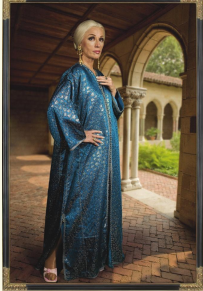
Title: Untitled #466|Artist/director: Cindy Sherman| Year: 2008, and place of origin: —-
Background
The above image is a self-portrait of Cindy Sherman. This image shows Cindy Sherman posing as if she was a wealthy and privileged modern woman. The background and the self-portrait were taken separately and layered together through digital tools. The artist typically uses digital tools to alter her appearance and location.
My Art Piece (Not an original photograph. Student can take a similar photo of themselves or another person. See background information for more information).

Title: Escape the Closet
Background
This photograph shows a lady with full make-up, but sadness engulfs her face. The picture was taken in a standard bedroom, but I used a digital app to change the background and insert a new one with a dark sky.
Connection
The thematic connection between the two pieces is that they both focus on social issues. Sherman’s photograph features women’s life from the top echelons of society. In the image, she is wearing a richly-decorated blue caftan and gold earrings and rings, but a closer look reveals her cheap sandals and stockings (Martin and Jacobus, 2019). Sherman uses these small details to inform us that we cannot trust what we see on the surface, and many “high-class” women probably fake their status.
Likewise, my artwork shows a young girl with a full make-up face. She fits modern beauty standards, but her face also shows despair and sadness. The image is set against a dark background to depict the youth’s struggle with impossible beauty standards. Obsession with status and struggle to meet beauty standards are common problems in modern society.
The similarity between both images is that they’ve altered reality, meaning the setting is artificial. We created our image by layering two images photographed separately (we altered the background of the original photo). The difference between the two photographs is that Sherman’s artwork is more complex than mine. The subject matter in my photograph is apparent, but Sherman transform an obvious subject matter through careful staging and highlight the form content through digital editing.
Both images have the same medium (photographic medium). Technology, i.e., digital editing apps, has become vital in constructing experience as a lived reality (Carney, 2012). With these tools, artists can alter reality and give new meaning to an original image. These capabilities also allows viewers to construct their own experiences of the image (Carney, 2012).
The formal elements of design in photography help enhance the image’s visual impact. These include composition, texture, line, light and color, patterns, and shapes. Composition refers to the arrangement of objects within the image’s frame, while texture refers to the details on the object’s surfaces. In Sherman’s photos, one can see the domes’ shadows along the hallway where she is standing. This texture gives life to her photograph and creates the illusion that it was taken under the sun. Besides texture, light also affects color and its saturation and hues values. Photographers often use color to set the atmosphere for their images. My photograph uses depth to create a sense of space within the image’s frame. I zoomed in on the face, isolating it from the background and foreground. This focus helps to emphasize the importance of the girl’s face. Sherman’s work does not contain the depth depicting in mine.
References
Carney, L. (2012). Seeing Images: Contemporary Uses of Photography in Constructing Our Experiences of Art and Museums. Www.academia.edu. https://www.academia.edu/2167148/Seeing_Images_Contemporary_Uses_of_Photography_in_Constructing_Our_Experiences_of_Art_and_Museums
Martin, F. D., & Jacobus, L. (2019). Humanities through the Arts. McGraw-Hill Education
To get your original copy of this paper, please Order Now
Related Questions
Photography and Cinema (ANSWERED)

